
Tag: Business

  • We Just Launched Siempre Feedback — Customer Feedback Platform That Actually Gets Answered

    Today I’m thrilled to share something my team and I have been building for a long time: Siempre Feedback is officially live at siemprefeedback.com.

    If you run a physical space — a café, a hotel, a pharmacy, a gym, a row of vending machines — you already know the hardest part of improving it. You can feel when something is off, but you rarely hear about it in time to fix it. The unhappy customer doesn’t fill out a survey. They just don’t come back. And the happy one never tells you what made their day. That silent gap between experience and insight is exactly what we built Siempre Feedback to close.

    What Siempre Feedback does

    Siempre Feedback turns a single QR code into an instant channel for real-time customer feedback. You place a code where the experience happens — on the table, the machine, the counter, the door — and customers tap, vote, and tell you how it went in seconds. No app to download. No login. No friction.

    The result is a QR-code voting and feedback tool that meets people exactly where they are, while the experience is still fresh. Instead of a trickle of forgotten survey emails, you get a steady, honest pulse on what’s working and what isn’t — organized by location, by sentiment, and by topic, so you always know where to look first.
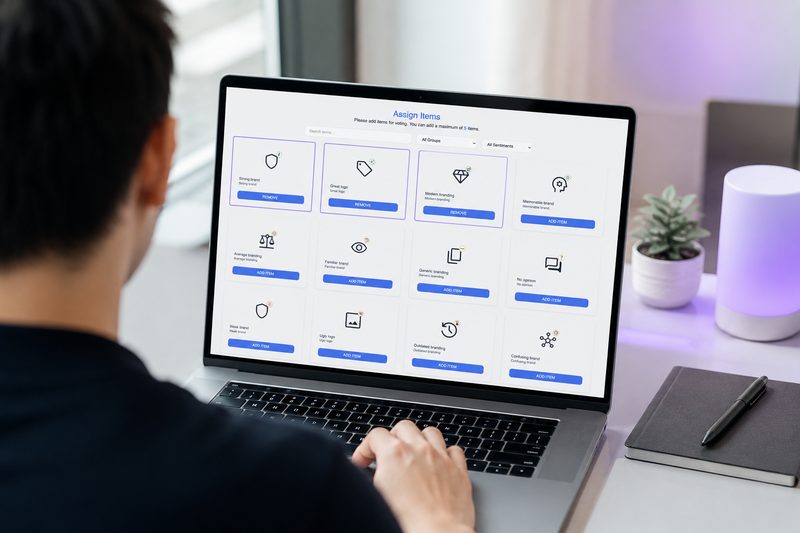
    assigning the feedback options
    Adding the different feedback options

    Why we built it

    Most customer feedback tools were designed for e-commerce and inboxes. They ask for effort at the wrong moment, from people who’ve already moved on. We wanted something built for the real world — for the businesses that live and die by the in-person experience.

    While Rekvestor.com solves the issue of understanding what market would like to buy, Siempre Feedback is focusing on the real feedback from the services, products, …

    So we obsessed over three things:

    Effortless for the customer. One scan, a couple of taps, done. The easier it is to leave feedback, the more feedback you get — and the more representative it is.

    Instant for the owner. You see results as they come in, not weeks later in a report nobody reads. When a location dips, you know today.

    Clear at a glance. Every response is sorted by sentiment and topic, so patterns jump out. You don’t need to be a data analyst to run a better business.

    Who it’s for

    Siempre Feedback works anywhere a customer has an experience worth improving: cafés and restaurants, hotels, pharmacies, retail stores, gyms, coworking spaces, and vending operators. If people pass through your space, you can start listening to them today — with nothing more than a QR code on the wall.

    Start collecting feedback today

    Launching a product is a beginning, not a finish line. We’re going to keep making Siempre Feedback faster, smarter, and more useful, and the best ideas will come from the businesses using it. If that’s you, I’d love for you to be part of it.

    Come see what your customers have been trying to tell you. Visit siemprefeedback.com and set up your first QR-code feedback point in minutes.


    Let your users give you feedback when they want it
    User providing feedback at the clinic


    Barista checking the votes of customers.
  • How do I start my own e-commerce business

    You’re starting an e-commerce business and you’re thinking “How do I start my own e-commerce business?“. Yeah, you decided you have enough courage to start. But you’re not technical enough. Congratulations!

    This article is mostly intended for companies that want to test the market for their ideas. Company that wants to sell things on-line.

    Now some of the important things to consider are:

    • are you selling products vs. subscriptions based
    • how much budget do you have for an e-commerce platform
    • do you have knowledge for setting up an e-commerce platform
    • are there some payment types you prefer (credit cards, debit cards, local payment methods, bitcoin …)
    • are you offering physical or “virtual” products

    Products vs. Subscription based

    Physical products are part of your stock mostly, so once you sell them you need to replenish them. It could be necessary to have stock, meaning you need money to buy it, or you can go down the lane of dropshipping.

    What is dropshipping? You don’t need to pay for stock up front – other companies have the stock. After you sell it on your website, you buy. This is a good idea for starting a business.

    Budget

    Ideally you have some money to use to try your business model. Some of the possible costs you might think about when budgeting, are:

    • marketing costs
    • technology costs
    • shipping fees
    • office/warehouse costs
    • stock (if you’re selling physical products and need stock)

    Of course this is a very simple and short list, but this is really mostly what you need if you want to test the market for your idea. After you have decided you want to continue, you will probably need to budget more costs.

    Technical knowledge about e-commerce platforms

    Are you a technical person with programming knowledge? Setting up an e-commerce platform should be easy for you 🙂

    If you’re not – you might consider finding a person to help you out with that part (or of course – you can contact us to help you).

    Payment methods

    There are a lot of different payment methods, but mostly you can group them into the following:

    • credit cards
    • debit cards
    • cash payments (yes, that is still possible)
    • Crypto
    • …

    If you’re offering your products/services globally, it’s easiest to use credit cards option.

    But if you’re working on a local market, then you might consider going to more localized methods. That mostly means that people trust those payment methods more than credit cards, or at least they know how to use them. It usually also means that the transaction costs associated with the payment are lower (mostly).

    Use case: Resportly

    When we started Resportly, we knew we want to:

    • offer subscription-based lease of sports gear
    • we have a limited budget, but not 0
    • we have internal technical knowledge, but less knowledge about sports gear – so testing business was possible through technology
    • we prefer local payment methods (iDeal) to credit cards
    • we will be using a combination of dropshipping and buy-as-we-need (when an order comes in, we will buy the sports gear)

    E-commerce platforms

    There are different e-commerce platforms. Some of them that we tested are:

    • Shopify: general shop, best for selling physical products, easy to use, monthly subscription + payment fees. For selling subscriptions there are possible modules for an additional fee.
    • Subbly: specialized in subscription-based shops, easy to use, monthly subscription + payment fees
    • WooCommerce: most complicated for a beginner, but it offers a lot of customization – you can install additional plugins (functionality). Free software but you will need a web hosting provider, which charges a monthly fee.

    Now – How do I start my own e-commerce business and which platform to choose?

    You try them

    We started with Shopify to see their functionality. We liked how fast we were able to launch and easy it is to use. And simplistic design.

    But there was no out of the box functionality for subscriptions. And that would require additional monthly costs.

    We tried this in combination with local payment methods and it didn’t work – which would mean higher costs for us and our users.

    We tried Subbly, which is simple to use and it’s meant for subscription-based businesses – all good. But no support for local payment methods, which would bring the costs up.

    We ended up with WooCommerce, which took more time to implement, but luckily we had technical knowledge. It offered local payment methods, which we needed. And it was more customizable than other SaaS solutions. And it offers an easy blogging platform, too. Read more here.

    Some advice

    Consider what’s important for you and your consumers

    Try not to over-think your business model, rather get right to it – rapid prototyping

    Connect with technical people (if needed)