

Category: Data & Analytics

  • We Just Launched Siempre Feedback — Customer Feedback Platform That Actually Gets Answered

    Today I’m thrilled to share something my team and I have been building for a long time: Siempre Feedback is officially live at siemprefeedback.com.

    If you run a physical space — a café, a hotel, a pharmacy, a gym, a row of vending machines — you already know the hardest part of improving it. You can feel when something is off, but you rarely hear about it in time to fix it. The unhappy customer doesn’t fill out a survey. They just don’t come back. And the happy one never tells you what made their day. That silent gap between experience and insight is exactly what we built Siempre Feedback to close.

    What Siempre Feedback does

    Siempre Feedback turns a single QR code into an instant channel for real-time customer feedback. You place a code where the experience happens — on the table, the machine, the counter, the door — and customers tap, vote, and tell you how it went in seconds. No app to download. No login. No friction.

    The result is a QR-code voting and feedback tool that meets people exactly where they are, while the experience is still fresh. Instead of a trickle of forgotten survey emails, you get a steady, honest pulse on what’s working and what isn’t — organized by location, by sentiment, and by topic, so you always know where to look first.
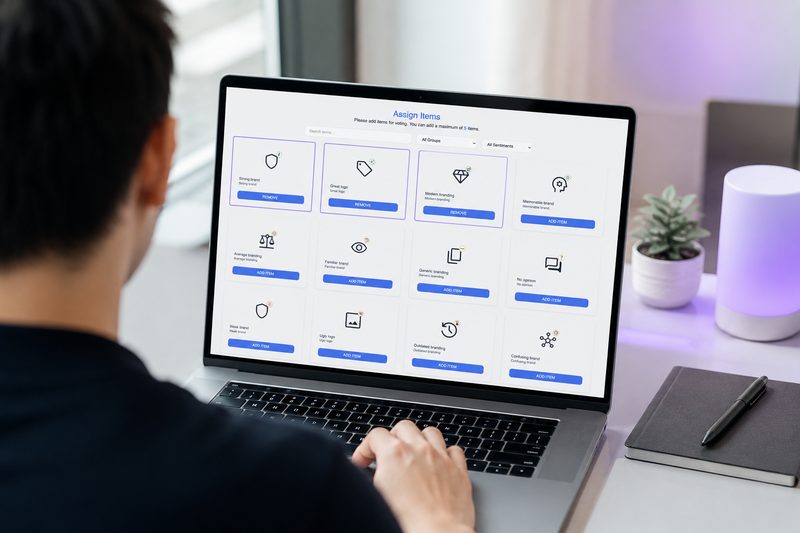
    assigning the feedback options
    Adding the different feedback options

    Why we built it

    Most customer feedback tools were designed for e-commerce and inboxes. They ask for effort at the wrong moment, from people who’ve already moved on. We wanted something built for the real world — for the businesses that live and die by the in-person experience.

    While Rekvestor.com solves the issue of understanding what market would like to buy, Siempre Feedback is focusing on the real feedback from the services, products, …

    So we obsessed over three things:

    Effortless for the customer. One scan, a couple of taps, done. The easier it is to leave feedback, the more feedback you get — and the more representative it is.

    Instant for the owner. You see results as they come in, not weeks later in a report nobody reads. When a location dips, you know today.

    Clear at a glance. Every response is sorted by sentiment and topic, so patterns jump out. You don’t need to be a data analyst to run a better business.

    Who it’s for

    Siempre Feedback works anywhere a customer has an experience worth improving: cafés and restaurants, hotels, pharmacies, retail stores, gyms, coworking spaces, and vending operators. If people pass through your space, you can start listening to them today — with nothing more than a QR code on the wall.

    Start collecting feedback today

    Launching a product is a beginning, not a finish line. We’re going to keep making Siempre Feedback faster, smarter, and more useful, and the best ideas will come from the businesses using it. If that’s you, I’d love for you to be part of it.

    Come see what your customers have been trying to tell you. Visit siemprefeedback.com and set up your first QR-code feedback point in minutes.


    Let your users give you feedback when they want it
    User providing feedback at the clinic


    Barista checking the votes of customers.
  • How to become more efficient by automation

    Now many of you might want to become more efficient and don’t know how – here you go – by automation.

    For me, it all usually starts with being annoyed by very repetitive tasks. Those are the tasks that mostly are boring – and I really don’t like boring.

    Background of the story

    So back in days I had to export certain data-set daily (weekends included!) into the shared folder that was transferred to certain other systems before 8 o’clock in the morning. In e-commerce, there is a great need to have certain lists exported and imported into other systems (for sending marketing campaigns out, for example).

    And I didn’t like waking up during weekends. I really didn’t. And there was this other problem – if I was off, somebody else had to do it.

    Manual Automation

    So the first step from “fully manual” to manual automation was to write a SQL query that uses calculated dates/times instead user changing the SQL query. Yep, this one is easily achievable with some knowledge of SQL:

    SELECT *

    WHERE “DATE” >= CURRENT_DATE() – 1;

    This will give you last 1 day changes in the query.

    I also think that part of manual automation are the following steps:

    • Putting export files, based on the above statement, to a shared drive
    • Sharing those files with people that will manually import it to other systems
    • Import those files into the required system

    (Full) Automation

    This is where you really make a difference – save yourself some (a lot) of time and let the computers do the heavy (repetitive) lifting. You can invest your precious time on the important stuff!

    Now here you can go down multiple roads:

    1. write the automation scripts yourself
    2. search for automation/integration tool

    Write scripts yourself

    If you have good programming knowledge (or you think you can Google anything and make a decent version of code) and not really budget to introduce automation/integration tools, you should write your own automation scripts.

    If you really want it to be a proper automated solution, you might want to put it into a cloud, which is online 24/7 (or at least configurable to be online when it needs to be online). Besides that, you will need some online storage to put files. And it needs to allow some sort of triggers.

    We used Apache Airflow as an orchestration tool and Python scripts (stored within GitHub) to load data between systems. The scripts were connecting to source systems, execute certain SQL statements and move data to (AWS) bucket. The other task in the Apache Airflow was triggered after the previous was finished and that task pushed data from a bucket into the Marketing System.

    Automation Tools

    Especially in the e-commerce area there are a lot of integration tools that will help you automate your data pipelines.

    They will allow you, by drag and drop and clicking, to automate most of your data transfers. They usually defer based on the number of integrations with different systems and tools you are using.

    It is essential to write down all your tools and systems you’re using and try to find a tool that supports all or most of them. If they don’t support some, they should allow you to use some language (Python, R, …) to cater for your needs for special systems. And make sure that you can get a proper support.

    Testing

    I would recommend you spend some time to test and, if possible, you should work on different systems – development, production – to avoid sending wrong marketing campaigns to wrong people.

    Conclusion

    So how to become more efficient by automation? If you want to become more efficient, you should do it by automation. Automate the repetitive tasks will also make you happier and able to focus on the important challenges. And it can also improve your profit.

    And it will make your whole business more scalable and reliable – you will remove the human factor (such as “I forgot to upload file”, “My internet didn’t work”, …)

  • Data-Driven Organization

    I get a question “What is Data-Driven organization?” a lot. And then soon after the question becomes “Can you help us become Data-Driven Organization?”